Pay in installments of $6.94 with
 ,
,
 and
and

Shipping Estimate
USA
- USA
- CAN
- USA
- CAN
Ships within 48 hours · Estimated delivery Oct 12 - Oct 17
 Promo Codes Available:
For Your Every Summer RSVP, with Code: SUMMER15
Description
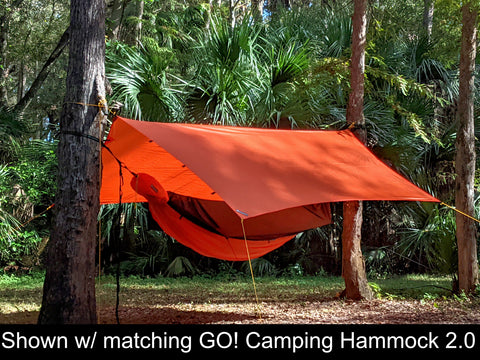
hammok tents Apex Camping Shelter 2.0Apex Camping Shelter 2. 0 The Apex Camping Shelter 2. 0 is a versatile, high quality weather shelter that will protect you and your gear from rain, wind, sun, and even snow! This tarp is excellent for hammock camping, but it's also makes a great all purpose camping tarp, or shade canopy, even when you're not using a hammock! It's not just for hammock camping! This 11' long tarp is great for hammock camping, tarp camping and as an all purpose camping
Apex Camping Shelter 2.0
The Apex Camping Shelter 2.0 is a versatile, high quality weather shelter that will protect you and your gear from rain, wind, sun, and even snow! This tarp is excellent for hammock camping, but it's also makes a great all-purpose camping tarp, or shade canopy, even when you're not using a hammock!
It's not just for hammock camping!
This 11' long tarp is great for hammock camping, tarp camping and as an all-purpose camping tarp or shade canopy.
It’s portable and lightweight! It can be set up in countless modes to adapt to many scenarios and weather conditions. You can use readily available tarp poles or found sticks to set up a freestanding shelter almost anywhere.
We released the original Apex in 2016 and it was one of our best selling products. We’ve made some major improvements to it while keeping all the features that made it so popular and highly rated.
Optional Tarp Door Kit
The optional Tarp Door Kit comes with 2 sets of doors that can help block wind and rain as well as provide privacy at both ends of the tarp.
Improvements to Version 2.0
Extra Waterproof Coating
The Apex is made from our proven and time tested, high strength 70d polyester fabric with a durable polyurethane coating. For version 2.0 we’ve added an ultralight, waterproof coating to the top side of the tarp for even more protection than the original version. The new coating makes water bead up and shed off of the tarp. It absorbs less moisture than the original, and it dries super fast.
Upgraded Rapid Deployment Bag
Version 2.0 includes a free Rapid Deployment Bag that has two openings so it deploys fast like a parachute! It packs up quick and easy. This is a major improvement over the original version, that included a smaller, standard stuff sack.
The Rapid Deployment Bag is designed to stay on one end of the tarp when you set it up. It has two openings so you can connect one end to a tree or a ridgeline and pull the tarp out from the other end. The stuff sack is oversized so packing up the tarp is a breeze.
Stronger Construction
Version 2.0 features extra reinforcements at the 20 tie out loops, to ensure that it will serve you well for years to come. The ridgeline seam has professionally installed waterproof seam tape. There is no need for you to waste your time and money with messy seam sealers that are required with many other tarps.
Countless Configurations
With 20 tie out loops you’ll have the freedom to get creative with setting up your shelter. With so many modes to choose from, you can quickly adapt it to the environment and to changing weather conditions. The Apex can be pitched many different ways.
Here are some of the modes possible with the Apex Camping Shelter 2.0
Storm Mode
The Apex is set up low and the corners are staked down tight to block rain and wind.
Porch Mode:
For this popular one or both sides of the tarp are propped up with trekking poles or found sticks. This mode provides a view, headroom and a dry living area. It can be quickly converted to storm mode if the weather changes
Single Pole Porch Mode
Similar to porch mode but only one pole is used at the center tie out loop. This mode gives extra space to move around, has better view than storm mode, protects you from rain and only requires one stick to set it up. This configuration can also be quickly converted to storm mode.
Convertible Mode
This mode can be used with many of the other other modes. Just remove the stakes from one side of the tarp, flip it over the other slide and tie off the corners. This mode gives you a great view and ventilation but you can quickly convert it to storm mode, if rain rolls in.
Shade Canopy and Rain Shelter Modes:
The Apex Camping Shelter makes a great portable and compact shade canopy or rain shelter that you can take anywhere. You can use readily available tarp poles or found sticks to set up these modes even when there are no trees available.
Offset Mode
You can use any of the tie-out loops on the ends of the tarp to set it up off center to block wind. The many tie-off loops at the ends make the Apex extremely versatile.
A-frame Tarp Camping Mode
Found sticks or trekking poles are used to set up a freestanding shelter. The 11’ length provides lots of covered space. You can add found sticks to or use long guy lines to raise sections of the tarp to create more ventilation, a better view and more dry living area on rainy days.
Single Pole Tarp Camping Mode
This mode requires only one pole to set up a freestanding shelter quickly and easily. This mode blocks wind from three directions.
Cave Mode
To set up this mode, tie one end of the tarp ridgeline as high as you can reach on a tree. Next, stake out two corners on the tree end of the tarp and then the corners and center on the other end
Storm Mode with Partially Closed End
The end tie-out points allow the tarp to be partially closed to add extra weather protection at the ends of the hammock.
Storm Mode with Closed Ends
This hammock camping mode mode can be useful when heavy rain and wind are expected and you really want to hunker down. This shape is more aerodynamic than many other modes which can reduce the wind load on the tarp. For this mode use the center tie-out loops and guy ropes to pull out the tarp. One or both ends of the tarp can be closed by staking down the corner tie-outs together at the ends of the tarp.
What’s included?
The Apex Camping Shelter 2.0 includes six stakes, two 15' guy ropes with tensioners, six 8' guy ropes with tensioners, a storage bag for the stakes and ropes and a water resistant Rapid Deployment Bag.
Optional Tarp Door Kit
[Tarp Door Kit Video coming soon]
Our Tarp Door Kit includes two sets of tarp doors, one set for each end of the Apex. The door kit is designed to increase protection from wind and rain blowing in from the ends of the tarp and to provide privacy.
Each door kit includes two tarp doors, each with seven line-loc tensioners & side release buckles, two 10' shock cords, four 4' shock cords plus four stakes and ropes. Each line-loc has a side release buckle that makes setting up and opening and closing the doors a breeze.
After the initial set up, the door kits can be set up fast by connecting the side release buckles.
Specs. Apex Camping Shelter 2.0
- Dimensions: 11’ Length X 9’4” Width
- Shape: Elongated Hexagon with Catenary Cuts
- Tie Out Loops: The Apex has 20 Tie Out Loops
- Material: 70D Polyester Fabric with 1,000mm Waterproof Polyurethane Coating & Silicone Top Coating
- Ridgeline Seam Waterproofing: Factory Sealed w/ Permanent Waterproof Tape
- Tarp Weight: 1 lb. 7 oz.
- Included Free Accessories Weight: 14 oz. (Included stakes & ropes can be replaced w/ lighter weight items)
- Optional Tarp Door Kit Weight: 1lb. 3 oz.
Tutorials
Learning to set your tarp up can be fun and rewarding. You can practice setting it up in your backyard or a park to experiment with some of your favorite modes. We’ve created some video tutorials on how to set up the Apex and the Tarp Door Kit to get you started right away. We’ll be releasing more tutorials soon. With a little practice you’ll master setting up your shelter for many weather conditions.
Apex Camping Shelter Set Up Tutorial
Tarp Door Kit Setup Tutorial
Craftsmanship
From raw materials to the final product, the Apex Camping Shelter is made by skilled experts. The high level of craftsmanship of the Apex is second to none. By having experienced professionals produce this tarp, we are ensuring that each customer receives a high quality product that will serve them for years to come.
Expert Tested
We sent a prototype for testing to Derek Hansen, a renowned hammock expert and author of The Ultimate Hang: An Illustrated Guide to Hammock Camping. See his review here.
If you want to learn more about hammock camping, I highly recommend Derek's book! The Ultimate Hang: An Illustrated Guide to Hammock Camping
The Apex Camping Shelter was reviewed or featured in all of these websites and many more. Every review has been overwhelmingly positive. What are you waiting for? Buy an Apex Camping Shelter today before they sell out!
After you try the Apex, it will become an essential piece of your outdoor gear.
So please order your Apex Camping Shelter today and start planning your next camping trip!
Shipping Notes
- Free Standard Shipping on $100+ Orders to the USA.
- Except Preorder products are shipped in 48 hours.
- Delivery to the USA:
- Standard Shipping : 3-10 business days
- If time is of the essence, please consider selecting expedited delivery for faster service.
Exchange/Return Notes
- We offer a 30-day return/exchange service after receiving.
- Final sale items are not eligible for returns or exchanges.
- To process your return/exchange, please contact us at [email protected]
- Please click here for more details>>> Return & Exchange Policy